Bringing Art History to Life
In a recent class, AP Art History students got the chance to experience what they were learning firsthand as they prepared for an upcoming test.
Rather than spending the entire class period reviewing from their notes, Mrs. Evelyn Shoults created several hands-on stations around the classroom. Students moved from station to station, quizzing one another while putting the concepts and techniques they had studied into practice.
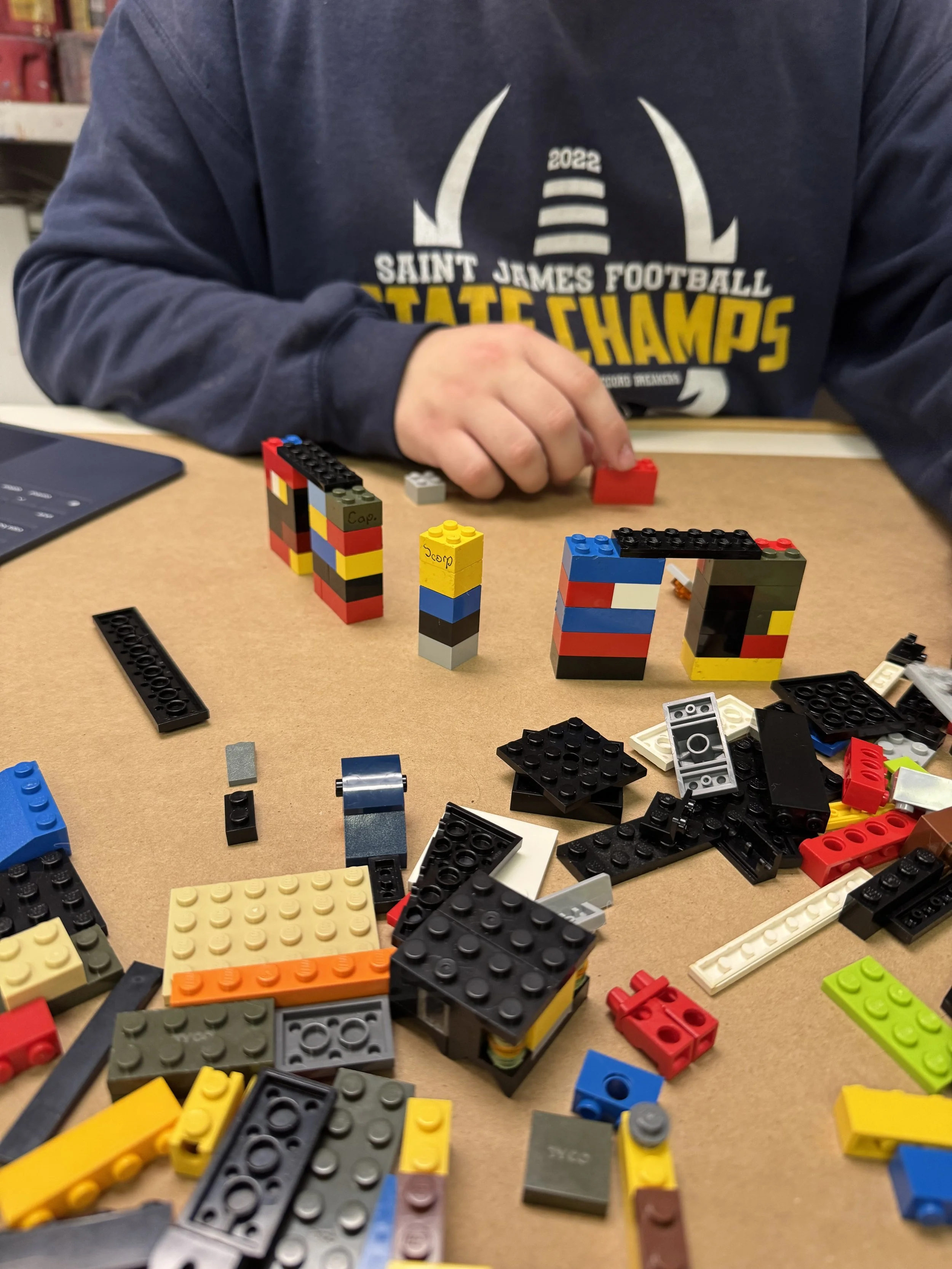
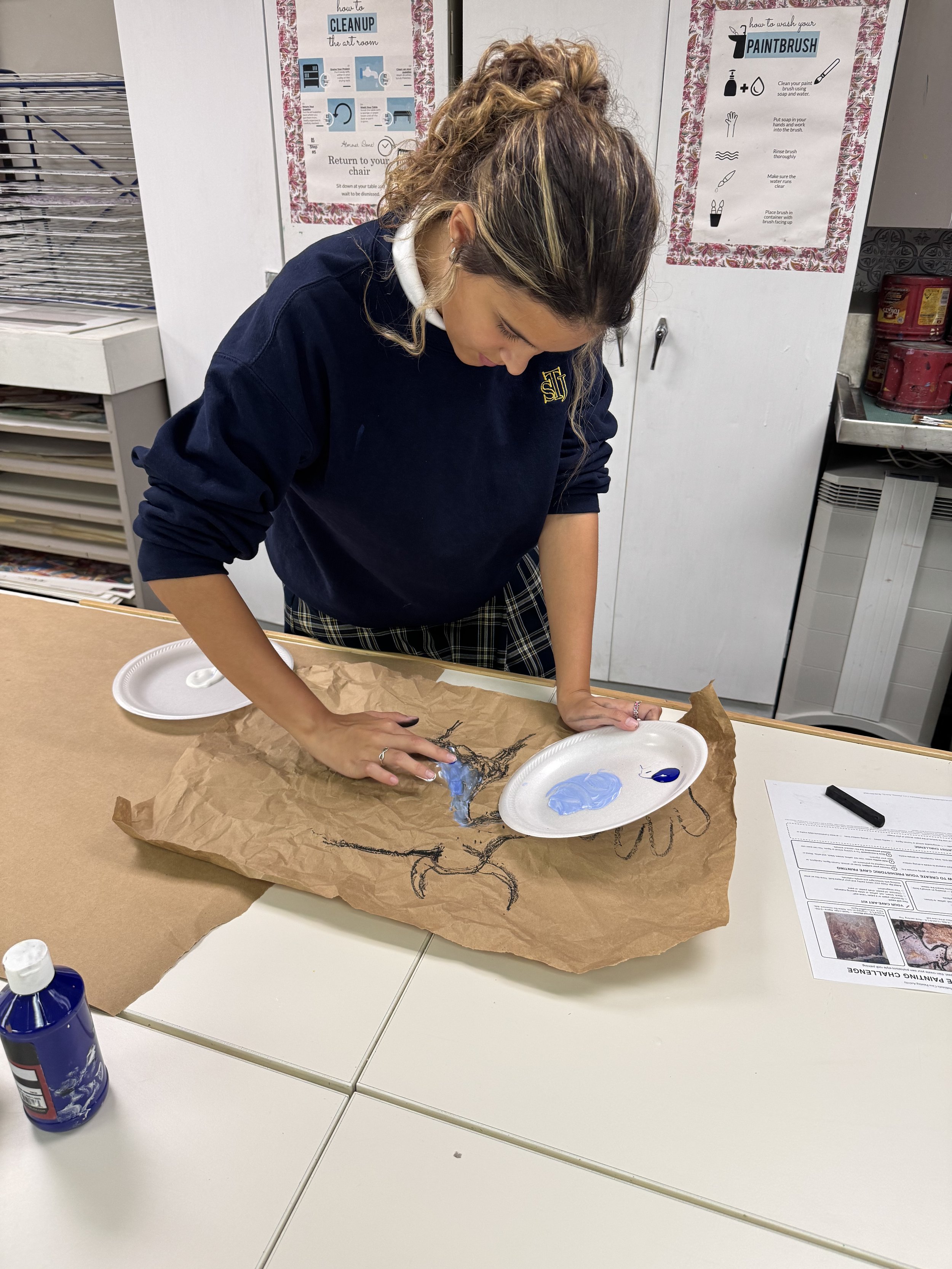
At the LEGO station, students recreated the building techniques used at Stonehenge, specifically practicing mortise-and-tenon and post-and-lintel construction. The Cave Painting station invited students to create their own artwork inspired by the Hall of the Bulls at Lascaux, giving them a better understanding of how early humans used imagery and natural materials to create art.
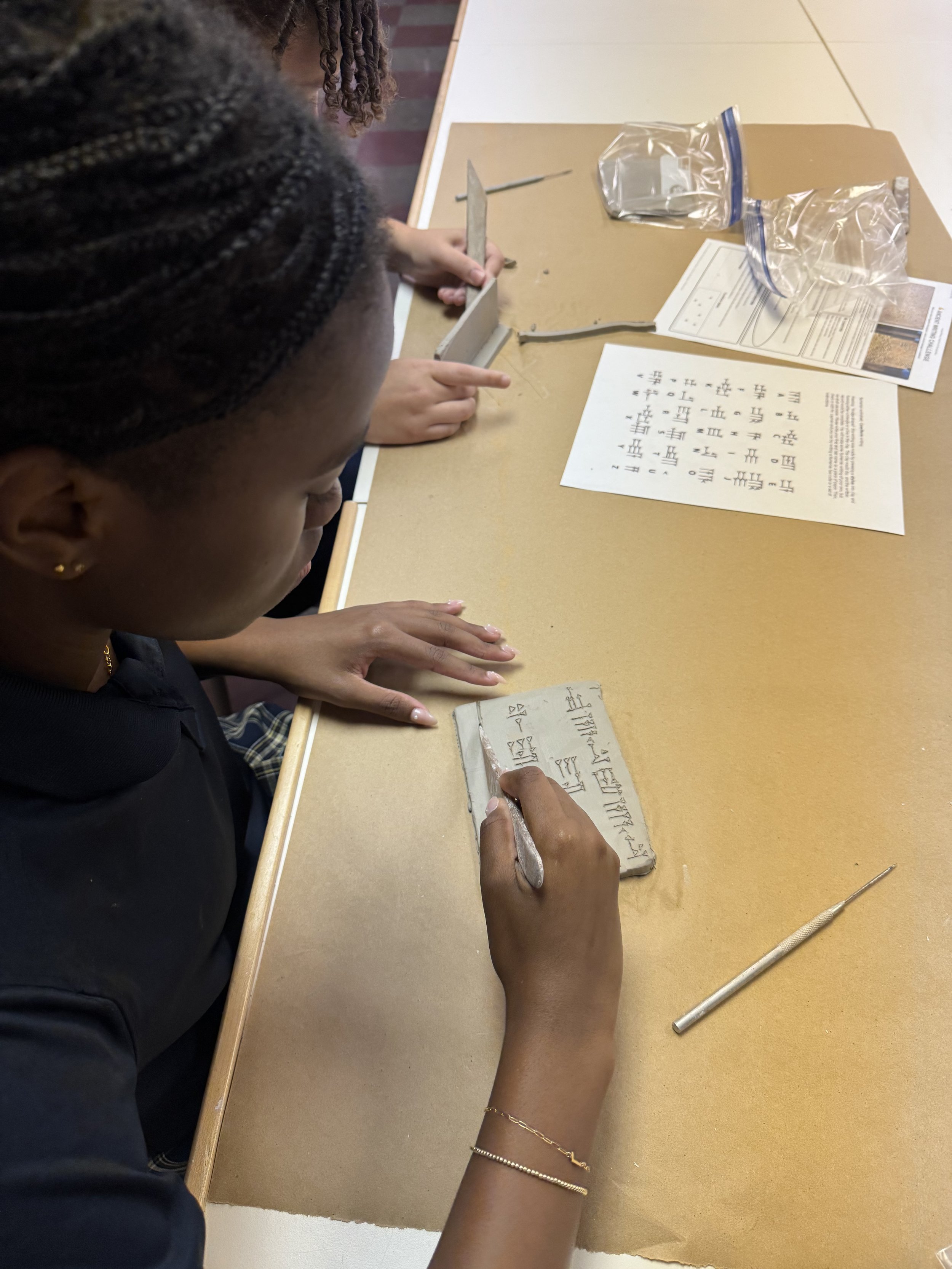
Students also worked with clay at the Incising station, practicing the technique found on the Terra Cotta Fragment. Creating the marks themselves helped students better understand the process behind the artwork rather than simply studying an image of it.
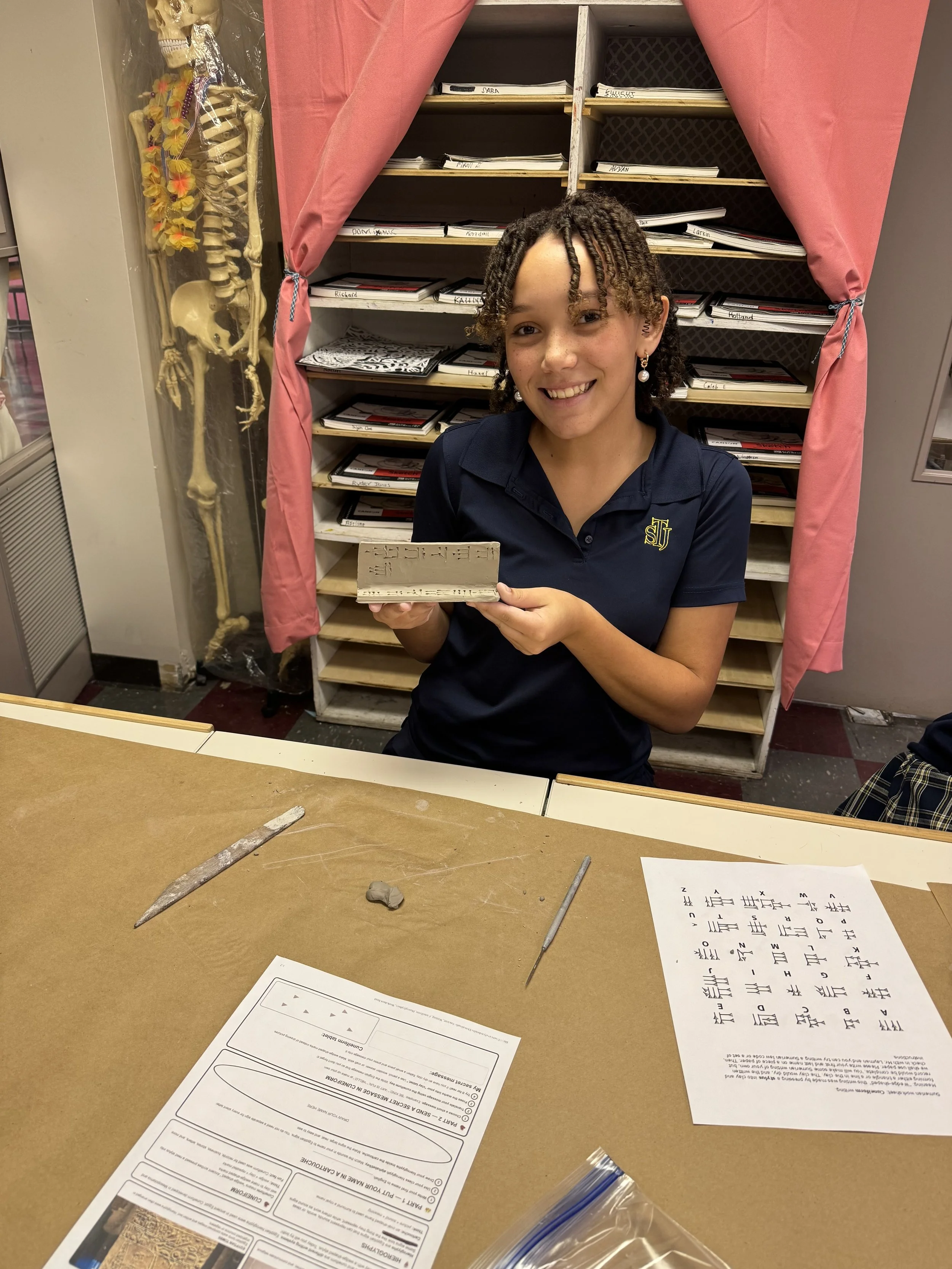
The final station connected Ancient Egyptian writing and art. Using clay tablets, students wrote their names or a saying using cuneiform or hieroglyphics. The activity even led to some unexpected connections to the Seated Scribe, as students quickly discovered just how difficult it can be to create precise writing and symbols in clay.
Throughout the class, students were actively moving, creating, talking, and making connections between the activities and the works of art they have been studying. It was a fun way to turn test review into an opportunity to experience art history rather than simply memorize it.
And judging by the level of engagement in the classroom, the students didn't mind studying this way one bit.